Draft in the author’s style. This poem was written for Poet in the Battlefield to sit beside the author’s own readings, and is waiting for the author’s review. The commentary is a working draft too.
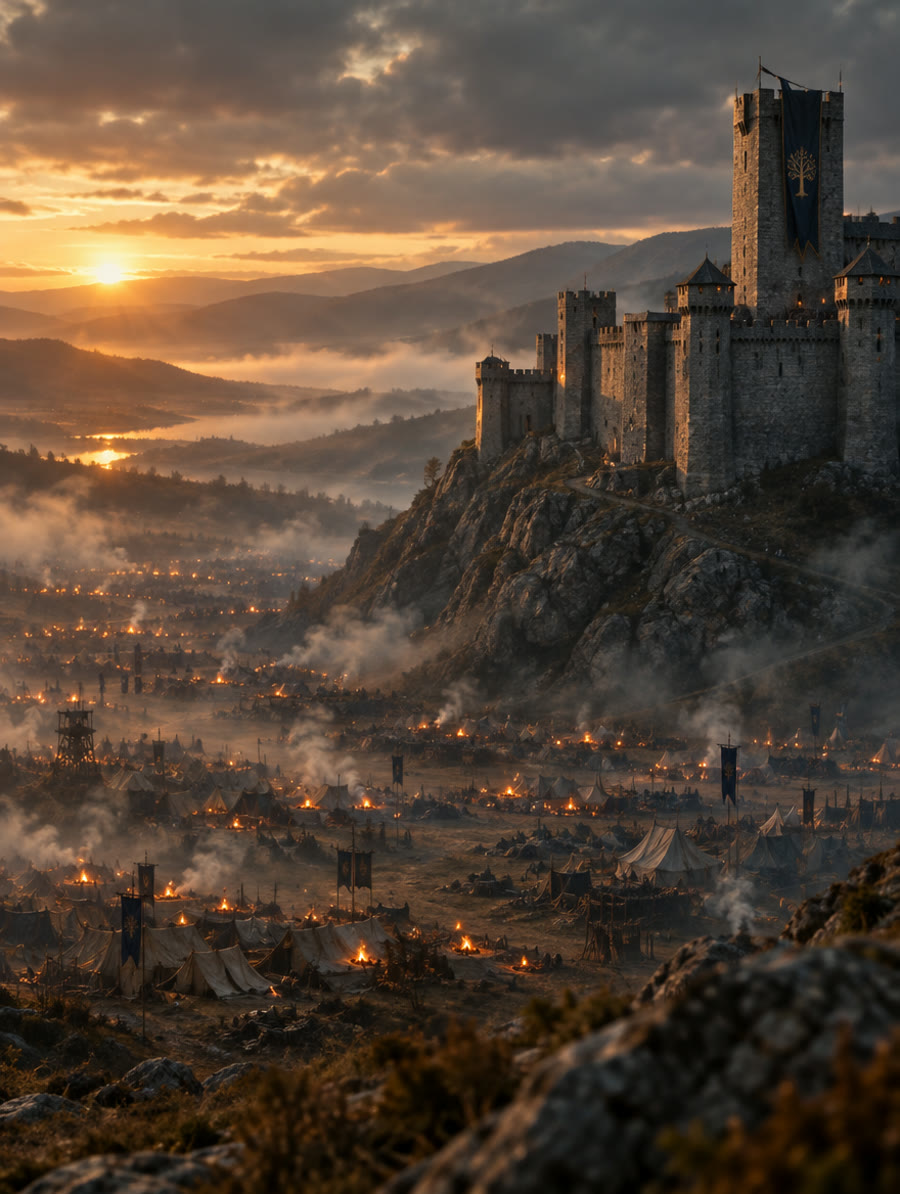
For forty days the fortress stood beneath a sea of spears,
With its walls of grey and granite and its watchers full of fears.
The wells ran dry, the bread ran low, and the winter wind blew sore,
But the garrison held on with a strength they'd not felt before.
The old men told the stories of the heroes long since gone,
And the children learned the anthem that the soldiers sang at dawn.
The women stitched the wounded and the blacksmiths beat the blades,
And the whole town was a fortress in the fighting of the raids.
Then on the forty-first grey morning, the horns of help were heard,
And the besiegers, startled, scattered like a flock of frightened birds.
The gates swung wide, and the people wept, and the banners rose again,
For a fortress is not stone alone, but the hearts of living men.
Poet in the Battlefield · Hear it on the channel ↗
Commentary
A siege tests a whole community, not only its soldiers. This longer poem follows forty days behind granite walls and shows the fortress as a place made by its people.
For “forty days the fortress stood beneath a sea of spears.” “The wells ran dry, the bread ran low, and the winter wind blew sore,” but “the garrison held on.” The old tell stories, “the children learned the anthem,” and “the women stitched the wounded” while the blacksmiths “beat the blades.”
On “the forty-first grey morning, the horns of help were heard,” and the enemy scatters “like a flock of frightened birds.” The gates open, “the people wept,” and the poem closes with its moral: “a fortress is not stone alone, but the hearts of living men.”