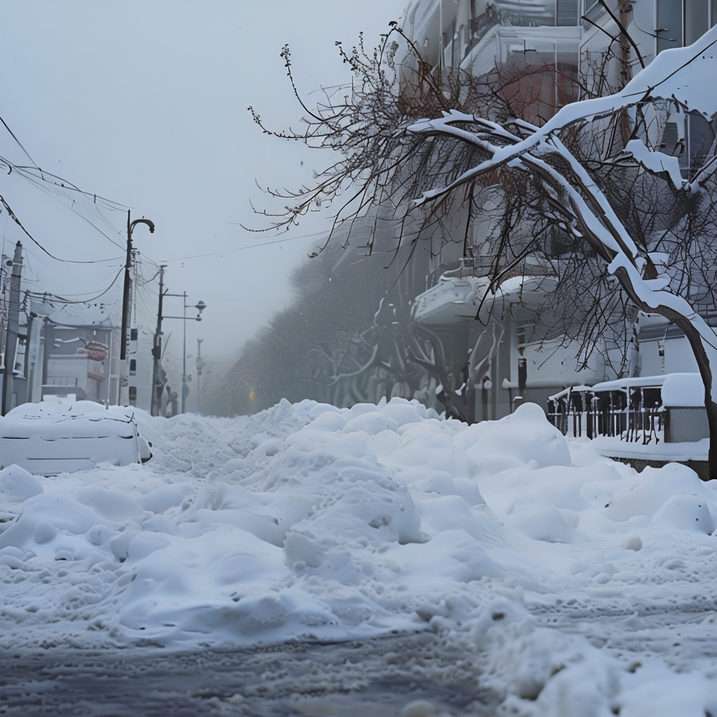
The wind moaned, the branches croaked,
the snow stacked high, the street lay choked.
But past the fence, beyond the gate,
a howl rose up, too thin, too late.
Each night it stretched, each night it grew,
a sound too sharp, too cold, too blue.
Was it a dog? A fox? A stray?
Why did it wail, then fade away?
The caretaker passed with eyes so tight,
never once glanced at the sound in the night.
I asked, he shrugged, “No pet lives there.”
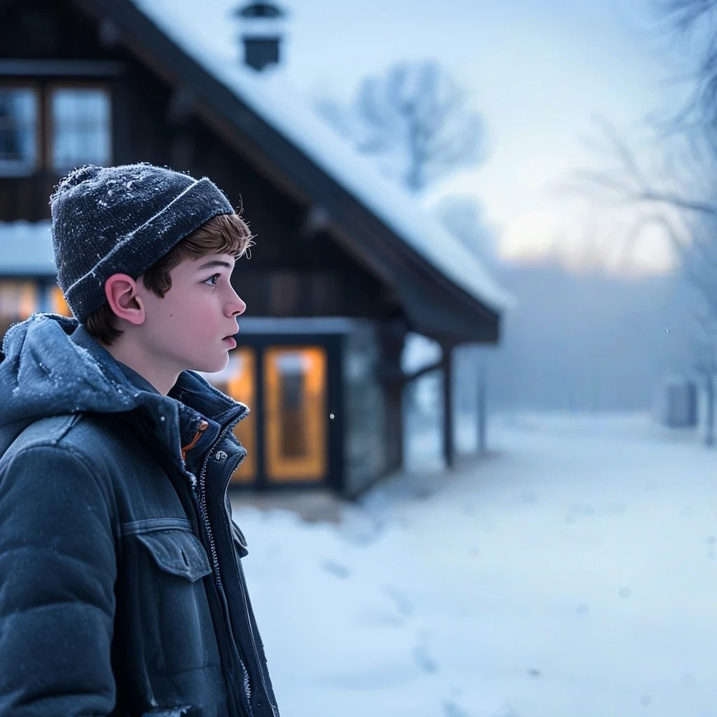
Yet still, the howls split the air.
I pressed my ear against the wall,
listened as the echoes crawled.
A scratch—a scuffle—a voice too thin,
a whisper trailing just within.
I grabbed my coat, my boots, my light,
determined now to end this fright.
Tiptoeing through the snowbound floor,
I nudged the neighbor’s creaky door.
Then—movement! A frantic dash!
Something jumped, a muffled crash!
I braced myself for tooth and claw
and gasped at what I saw...
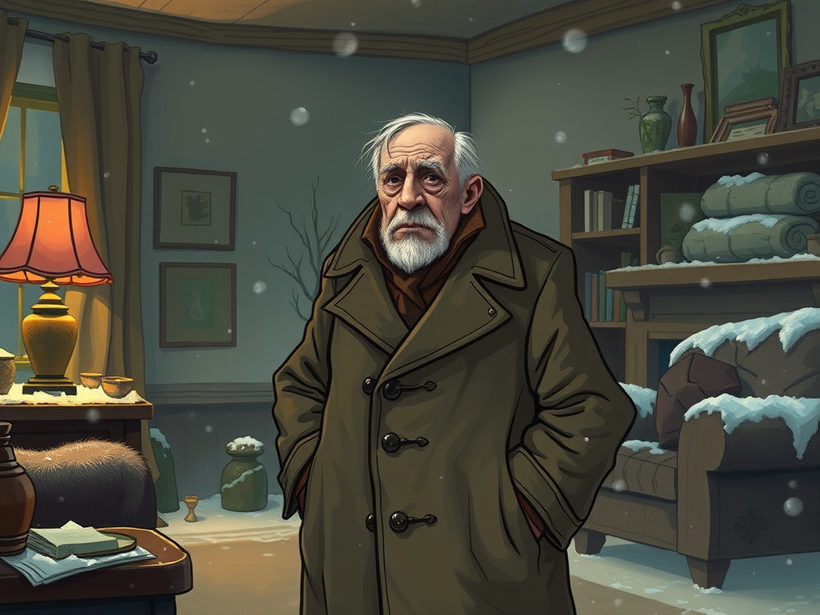
There stood old Mr. Finch, hunched and pale,
wrapped in four layers of coats, looking frail.
"Oh, that?" He blinked. "I sing at night"
"For my cat hates the cold and sleeps too tight!"
The howls? His singing. The shadow? His coat.
I stumbled back, suppressing a choke.
All these nights, the fear I bore—
was just a man with a voice too sore.
From then on, I slept just fine,
except when Finch hit his high notes at nine.
Poet of the Winter · page 50 · Hear it on the channel ↗
Commentary
This poem cleverly blends suspense with humor, creating an intriguing buildup that transforms eerie uncertainty into comedic relief. It follows the narrator’s journey of unease, doubt, and investigation—only to discover a mundane yet amusing truth behind the mystery.
The poem begins by setting an unsettling winter scene. The wind moans, the branches croak, and snow chokes the street, crafting an atmosphere where the unknown lurks beyond visibility. But the true tension emerges when a mysterious howl is heard each night, growing sharper, colder, and inexplicably strange.
The narrator speculates, was it a dog, a fox, a stray?, questioning why the sound persists yet fades away without explanation. Seeking answers, he approaches the caretaker, whose dismissive response, "No pet lives there." Only deepens the mystery.
Determined, the narrator listens closely through the walls, picking up echoes, scratches, and faint whispers, all building an increasing sense of dread. Finally, in pursuit of truth, he ventures outside, tiptoeing through the snow to investigate firsthand.
The tension peaks. A sudden movement, a frantic dash, a muffled crash and the narrator braces himself for something terrifying. But instead of a beast or ghost, the revelation is unexpected. Old Mr. Finch, wrapped in four layers of coats, delivering hoarse singing to a cat that sleeps too tightly to appreciate it.
The narrator, stunned, realizes the chilling howls were simply Finch’s strained nighttime performances. The fear that kept him awake for nights was nothing more than an elderly neighbor unknowingly turning winter evenings into eerie concert sessions. The final lines bring delightful irony. The narrator sleeps just fine, except for Finch’s loud notes at nine.