The rink was loud with crowd and clash,
A frozen stage where players dash.
Young Cody, calm with focused eyes,
laced up to chase his final prize.
His team, the Wolves, were fierce, renowned,
But never let their honor drown.
They played with heart, not rage or spite,
Their rivals, Hawks, came fast, elite,
Skates singing sharp like sleet on street.
And Max, their captain, cold as steel,
Had every move and lightning feel.
The whistle blew.
The game drew with speed and stir.
Cody weaved through foes like flame,
Each dodge a dance, each strike a name.
A slapshot soared, then echoed loud,
A ricochet beneath the cloud.
The score was tied, the clock grew thin,
One final run could seal the win.
Cody caught the puck—clean break,
A solo path on frozen lake.
Max pursued like wind on wing,
Their blades cut ice with stormy sting.
They reached the net—a clash, a crash,
Max slipped and hit the boards with bash.
Cody paused, the goal ahead,
But turned instead where Max now bled.
The crowd leaned in, the moment froze
Would he take gold or aid his foes?
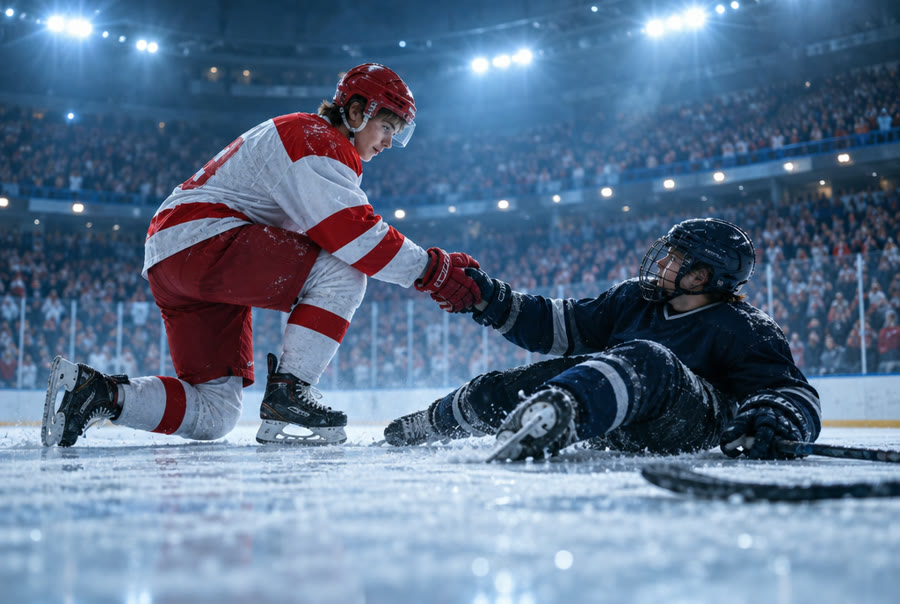
He knelt beside the fallen frame,
And whispered low, “It’s just a game.”
A glove was offered, pride undone,
For sportsmanship had truly won.
Though time expired, the echo stayed.
A tale of how true hearts are made.
Poet of the Winter · page 67 · Hear it on the channel ↗
Commentary
The Final Breakaway is a high-energy, emotionally resonant poem that captures the tension, thrill, and moral complexity of competitive sport. Set on a frozen rink, it follows young Cody in a climactic hockey match where the stakes are high—but the values of empathy and integrity ultimately triumph over victory. The poem blends action-packed imagery with introspective depth, culminating in a powerful moment of choice that defines character more than any scoreboard ever could
The poem opens with a vivid depiction of a hockey rink alive with noise and motion—a “frozen stage” where players dash and clash. Cody, the protagonist, is introduced as calm and focused, ready to chase his final prize. His team, the Wolves, are known for their fierce but honorable play, facing off against the elite Hawks, led by the formidable Max. As the game intensifies, Cody’s skill shines—his movements likened to flame and dance. With the score tied and time running out, Cody breaks away with the puck, racing toward the goal. Max pursues, and in a dramatic collision, crashes into the boards, injured. Faced with a choice—score the winning goal or help his fallen rival—Cody chooses compassion. He kneels beside Max, whispering, “It’s just a game.” The crowd watches in stunned silence as Cody offers his glove, and the match ends not with a goal, but with a gesture of sportsmanship. The final line reminds us that true victory lies in character, not conquest.