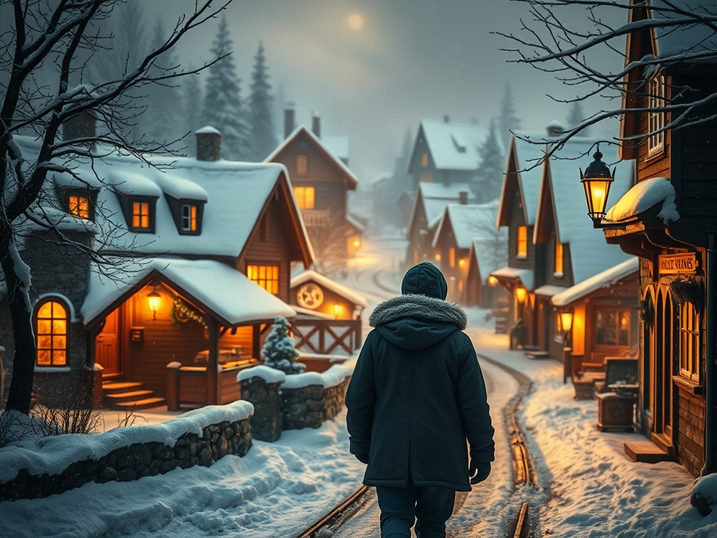
Snowflakes danced in hush so bright,
the village glowed with candlelight.
A traveler walked through winding roads,
wrapped in wool, braving cold.
The bells chimed soft, the pine trees swayed,
their voices lost in winter’s shade.
Then through the stillness, high and clear,
a choir sang, their song sincere:
"Silent night, holy night, all is calm, all is bright…"
The traveler paused, his heart took hold,
memories flickered, young and old.
Laughter spun in distant years,
warm hugs, childhood cheers.

His mother’s voice, his father’s tune,
snowy nights beneath the moon.
The scent of pine, the candle’s gleam,
a home once distant, now unseen.
The wind ran sharp, his breath stood thin,
but through the silence steps within.
A shadow long, an echo near,
was he alone, or something here?
The cabin door stood just ahead,
and a single lantern warmly spread.
His fingers shook and his pulse ran tight,
but love outshone the frozen night.
As dawn arose, the snow lay still,
and home had never felt so real.
Poet of the Winter · page 59 · Hear it on the channel ↗
Commentary
This poem elegantly captures a winter journey infused with nostalgia, serenity, and quiet suspense. It follows a lone traveler, threading through snow-covered roads toward home, while memories intertwine with present reality. The interplay between warmth and solitude, recollection and discovery, gives the piece an emotional depth that resonates with themes of belonging, remembrance, and the quiet magic of winter nights.
The poem opens with an evocative winter scene—snowflakes dance, the village glows, and bells chime soft, creating a peaceful and picturesque setting. The traveler, bundled against the cold, walks along winding roads, suggesting both a physical journey and an emotional passage through time.
As he moves through the stillness, a choir sings “Silent Night”, a real-world anchor that triggers his personal reflections. The song serves as a gateway, pulling him into vivid memories of past winters—his mother’s voice, his father’s tune, snowy nights beneath the moon. Through sensory details like the scent of pine and the candle’s gleam, the poem immerses the reader in the warmth of cherished moments now distant.
Yet, as the traveler nears his destination, winter shifts from nostalgic to uncertain. The wind sharpens, his breath stands thin, and suddenly, steps within break the silence. A shadow long, an echo near—has he returned to familiarity, or does something unseen linger?
The tension holds briefly, allowing suspense to rise. But as he reaches the cabin door, the warmth of home overcomes the uncertainty. A single lantern warmly spreads, illuminating his path, guiding him past hesitation. His fingers shake—suggesting both the cold and the emotional gravity of returning—but in the end, love outshines the frozen night.
The final lines affirm his arrival. Dawn rises, the snow lies still, and finally, home has never felt so real. The journey ends with resolution—what was once distant is now near, what was once uncertainty is now comfort.